
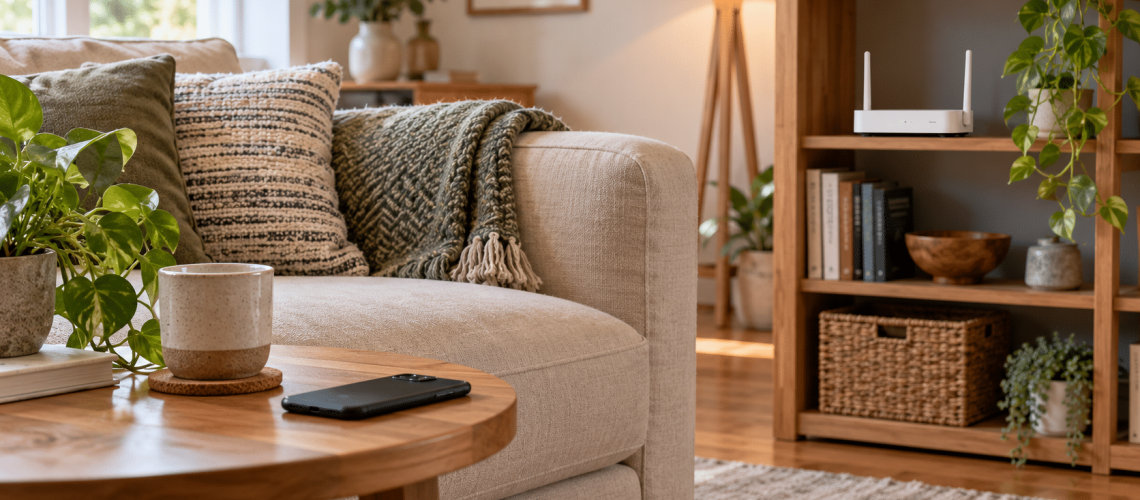

Reducing EMF at home can seem complicated. Between Wi-Fi routers, household wiring, mobile phones and neighbouring transmitters, it is easy to feel unsure where to start.
The most useful approach is to identify the sources, measure the relevant fields and make changes that produce a verifiable reduction. Sometimes a simple adjustment is enough. Other situations require specialist equipment or professional advice.
If you want to reduce unnecessary electromagnetic exposure without wasting money, these seven common mistakes are worth avoiding.
1. Measuring the wrong type of electromagnetic field
“EMF” is an umbrella term. Different sources produce different fields, and measuring one does not tell you everything about the others.
Radiofrequency radiation comes from wireless equipment, including mobile phones, Wi-Fi and cordless phones. Low-frequency electric fields relate to voltage in wiring and equipment, while magnetic fields arise from electrical current. High-frequency electrical interference on mains wiring requires another measurement approach.
An RF detector cannot assess every electrical condition in your home. Equally, a low-frequency meter cannot tell you how much Wi-Fi radiation is present.
What to do instead: Choose equipment suited to the field and frequency range you need to investigate. Check its capabilities before buying.
2. Assuming you already know the source
A visible mobile phone mast may attract attention, but visibility does not establish which source contributes most to the readings inside your home.
A nearby cordless phone base station, wireless access point or device beside your chair may warrant investigation. Electrical equipment on the other side of a wall can also be overlooked.
Guessing can lead you towards an expensive solution while leaving the actual source untouched.
What to do instead: Investigate systematically. Where practical, switch individual devices off and repeat measurements. Record what changes. Remember that some equipment transmits intermittently, so a brief reading may miss its activity.
3. Buying products before trying simple changes
It is tempting to start shopping immediately. However, reducing EMF at home does not always require shielding materials or specialist installations.
Increasing the distance between yourself and a source can reduce exposure. Moving a router away from a frequently occupied position, relocating a cordless phone base station or keeping a transmitting mobile phone away from your body may be straightforward first steps.
Using speakerphone or a wired headset can also reduce exposure from a phone held against the head.
What to do instead: Try practical changes first, then measure again. Preserve essential communications and equipment while addressing unnecessary exposure.
4. Installing EMF shielding without a plan
Shielding paint, fabrics, wallpaper and bed canopies have different applications. Their performance depends on the frequencies involved, material specification, coverage and installation.
A material’s laboratory attenuation figure does not guarantee the same reduction throughout a finished room. Windows, doors, seams and untreated surfaces can affect the result.
Shielding also needs to account for wireless devices operating inside the treated area.
What to do instead: Establish what you are shielding against and how the installation will work as a whole. Follow the manufacturer’s instructions, including any earthing requirements, and use a qualified electrician where electrical work is needed.
5. Expecting one product to address every problem
An effective product still has a specific purpose.
RF shielding does not automatically resolve low-frequency magnetic fields. A plug-in mains filter does not block wireless signals entering through a window. A wired internet connection removes the need for that particular wireless link, but other devices may continue transmitting.
The question is whether a product addresses the conditions you have measured.
What to do instead: Match the solution to the source. Ask which field or frequency range a product addresses, what installation it requires and how its effect can be checked.
6. Comparing readings taken under different conditions
Measurements can change with meter position, orientation, device activity and electrical demand. Some instruments display peaks; others average readings over time.
Comparing a peak reading beside a busy router with an average reading elsewhere creates a misleading picture. Different units can add further confusion.
A meter reading also describes a physical quantity. It does not, by itself, diagnose illness or establish that an exposure is harmful.
What to do instead: Use consistent positions, settings and units. Note which equipment is operating, follow the meter instructions and repeat observations before drawing conclusions.
7. Forgetting to check whether the changes worked
Installing a product or rearranging equipment is only part of the process. Without follow-up measurements, you cannot reliably judge the reduction achieved.
Check the places you actually occupy, including beds, desks and favourite seating areas. Reassess when equipment or room layouts change.
What to do instead: Keep a simple before-and-after record. If readings remain unexplained, seek advice before adding more products.
A practical approach to reducing EMF at home
Lower readings demonstrate reduced exposure; they do not automatically prove a health benefit. UK public health advice considers exposure within guideline levels protective.
For households choosing to reduce unnecessary exposure, measurement provides a sensible starting point.
Beneficial Environments offers EMF surveys, consulting and measurement equipment to help identify sources and prioritise practical changes. Understanding your environment makes it easier to choose appropriate solutions and check the results.
Useful links
- Professional EMF surveys
- EMF consulting
- EMF meters and measurement equipment
- EMF shielding products
- Home energy system EMI filtering